
Temple Meals 101
by Eva Kaniasty
With guidance from Zen Master Tan Gong (José Ramírez)
Sangha Newsletter Issue 11, Jan/Feb 2026
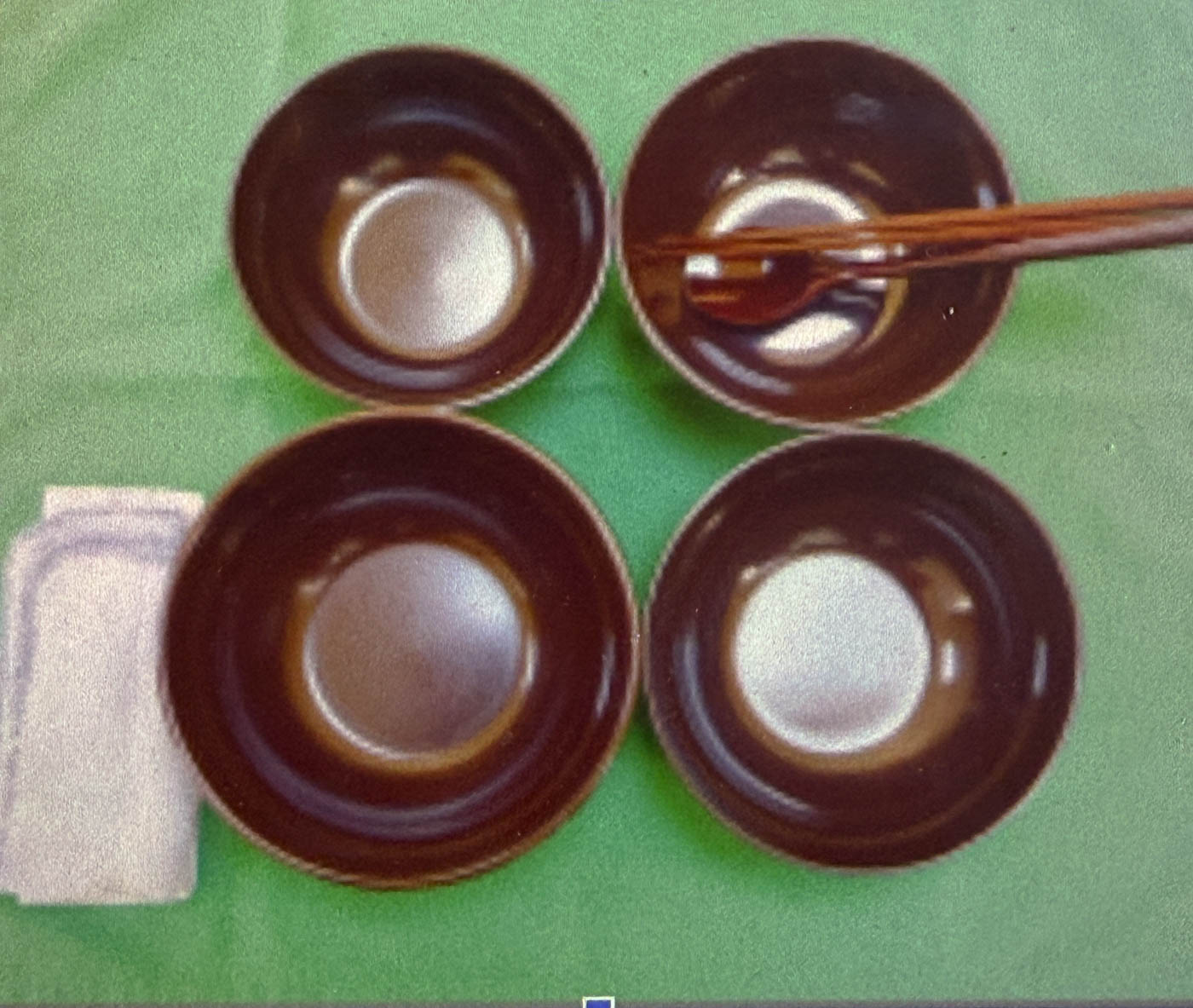
Temple Style Meals (발우공양 or “Barugongyang”), served during YMJJ and Kyol Che silent retreats, are one of the many practice forms inherited from our founder’s Korean lineage. Rather than serving as a break from practice, mindful eating is intended to help us keep clear mind moment to moment, even when engaging in routine activities. While it may seem intimidating at first glance, once mastered, this simple act of Together Action becomes a beloved part of practice for many, reminiscent of other expressions of Zen spirit, most notably the tea ceremony.
The temple meal originates in Korean Buddhist monastic practice. The meal is served in a set of four bowls representing the four elements (earth, air, fire, and water) and the central principles of Buddhism: Buddha, dharma, sangha, and mind. The entire process, including the placement of food, bowls, and utensils is part of the ritual, with each person taking only the amount of food they can finish to minimize waste. After the meal, bowls are cleaned carefully with water and tea so that no food remains, and an offering of clear water is made to “hungry ghosts,” symbolically saving these mythical beings “from the perpetuation of their endless cravings,” and reminding us that we too can attain freedom from craving through strong practice. (Dharma Mirror, 2014)
Stress-free formal meals for beginners
- Wash your hands before the meal to make serving and cleanup more hygienic
- If you are offered food but don’t wish to take it, hold up your hands in “hapchang” 🙏 to say “no thanks.”
- Don’t get up to help serve until you’re confident about your own meal technique
- When you’ve had enough water or tea, turn your bowl back and forth to say “when.”
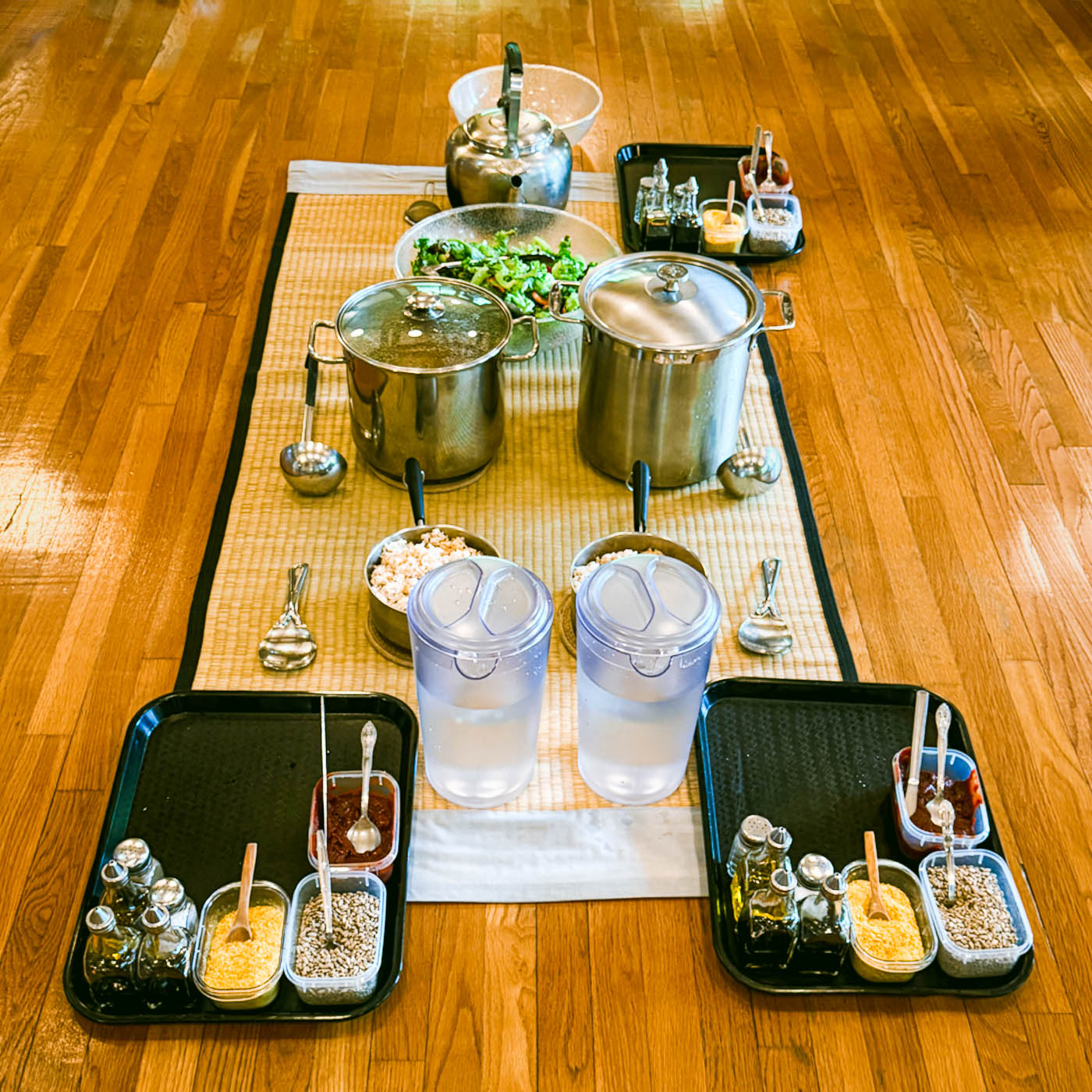
- Take condiments from the tray and pass it to your left. Pro tip: the red paste is Gochujang chili paste, not jam or jelly!
- Take what you need, but eat what you take. If you find that everyone has finished eating before you, cover your bowl with the napkin and put aside to finish at the next break.
- Use your bowls strategically – remember that you will need to use water and tea to clean them and drink down remaining crumbs.
- Grossed out by using fingers to clean your bowl? Use your spoon and/or the swooshing technique, but be careful not to spill. Alternatively, practice putting down your likes and dislikes and Just Do It!
- Don’t forget to save some clear water for “hungry ghosts.”
- When in doubt, follow the teacher or the person next to you. “Only moment to moment, do it. Yes, sometimes you make a mistake. Mistake is no problem.” – Zen Master Seung Sahn*
References and Learn More
Formal Meal Video: Part I and Part II
Barugongyang – the traditional Buddhist meal where nothing is wasted, by Knowing Korea
Dharma Mirror Manual of Practice Forms pp 2.24-2.33 (58-63 in PDF)
Formal Meal Templates in Un Mun’S Cake, The Kwan Um School of Zen retreat cooking [PDF download, pp 125-30]
Experience Temple Meals during Kyol Che and YMJJ retreats.