Beginner’s Mind: Karma
by Eva Kaniasty, with guidance from Zen Master Tan Gong (José Ramírez)
What comes to mind when you think of the word karma? Is it the idea of divine punishment or cosmic revenge? Or is it the hope of avoiding bad karma and getting justly rewarded for your good deeds?
In Sanskrit, karma simply means action, but in the Buddha’s teaching it refers exclusively to volitional or intentional action. In the Aṅguttaranikāya 6.63 §5 The Buddha says:
“Intention, I tell you, is kamma [karma]. Intending, one does kamma by way of body, speech, and intellect.” (Thanissaro Bhikkhu translation)
In Zen Buddhism, the meaning has expanded to include the consequences of all previous causes and actions that continue to impact our thoughts and behavior. This broader view of karma includes not just our own psychological baggage, but also our history and circumstances (e.g. being born to certain parents, in a unique body, in a certain country, etc.).
In most Buddhist traditions, the belief in rebirth is used to explain the fact that we come into this world with distinct personalities and inclinations, and that we sometimes suffer from seemingly random or unjust karma. For those who seek a secular explanation, karma can be understood as a combination of genetic factors, familial influences, culture, memories, habits, as well as our environment and circumstances across the lifespan.
In The Compass of Zen, Zen Master Seung Sahn discusses rebirth, but he also talks of personal karma as “mind-habits” and uses the simple metaphor of cause and effect to describe karma: “If rain comes, flowers appear everywhere. If there is no rain, the flowers do not grow.”
Whichever explanation resonates with you, in Mahayana Buddhism or Zen, the focus is not as much on past karma as on keeping an open “Don’t Know Mind,” allowing us to keep clear direction so that we can respond clearly and skillfully to any situation, fulfilling our Bodhisattva vow to help this world.
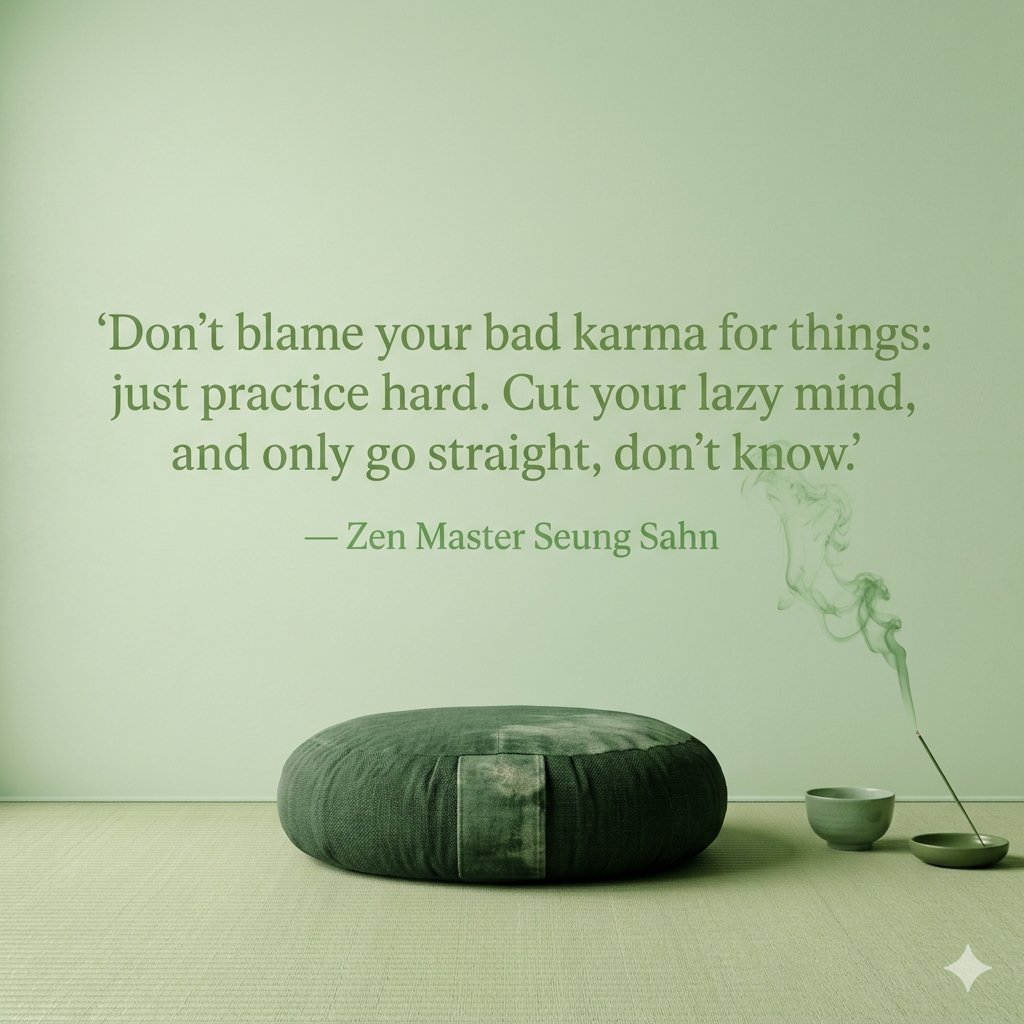
“Empty mind has no karma. You return to your original nature. When you return to your original nature, you control your direction.” – Zen Master Seungh Sahn
Karma Q&A
Is karma a type of punishment for bad actions?
In common usage in the West, the word karma has become quite loaded, carrying the connotations of divine punishment or cosmic retribution. In Zen, “making karma” simply means that our thoughts, actions, and decisions have real-world consequences. The karma of lending money to an irresponsible friend doesn’t necessarily mean you’ll end up going broke, but it may lead to that friend never having the opportunity to learn to manage their money. On the flip side, it may also allow them to treat their child to a toy for their birthday. Because we live in an ambiguous world, good or bad karma is often a matter of intention rather than an objective judgement. In the Majjhima Nikāya 135 the Buddha said,
“Student, beings are owners of their actions, heirs of their actions; they originate from their actions, are bound to their actions, have their actions as their refuge. It is action that distinguishes beings as inferior and superior.”
Is karma the same as fate or destiny?
While we don’t have control over the complex network of causes that result in our present situation, the concept of karma is not fatalistic and does not imply powerlessness. In fact, the core teachings of Zen focus on the level of empowerment that waking up to the present moment and responding skillfully to our situation can offer. Zen Master Bon Soeng (Jeff Kitzes) uses the metaphor of striking a match to illustrate the point of action/karma/agency that comes between cause and effect. What we choose to do with the resulting fire is also up to us and can lead to drastically different outcomes, whether a lit candle or a house fire.
What’s meant by digesting or composting our karma?
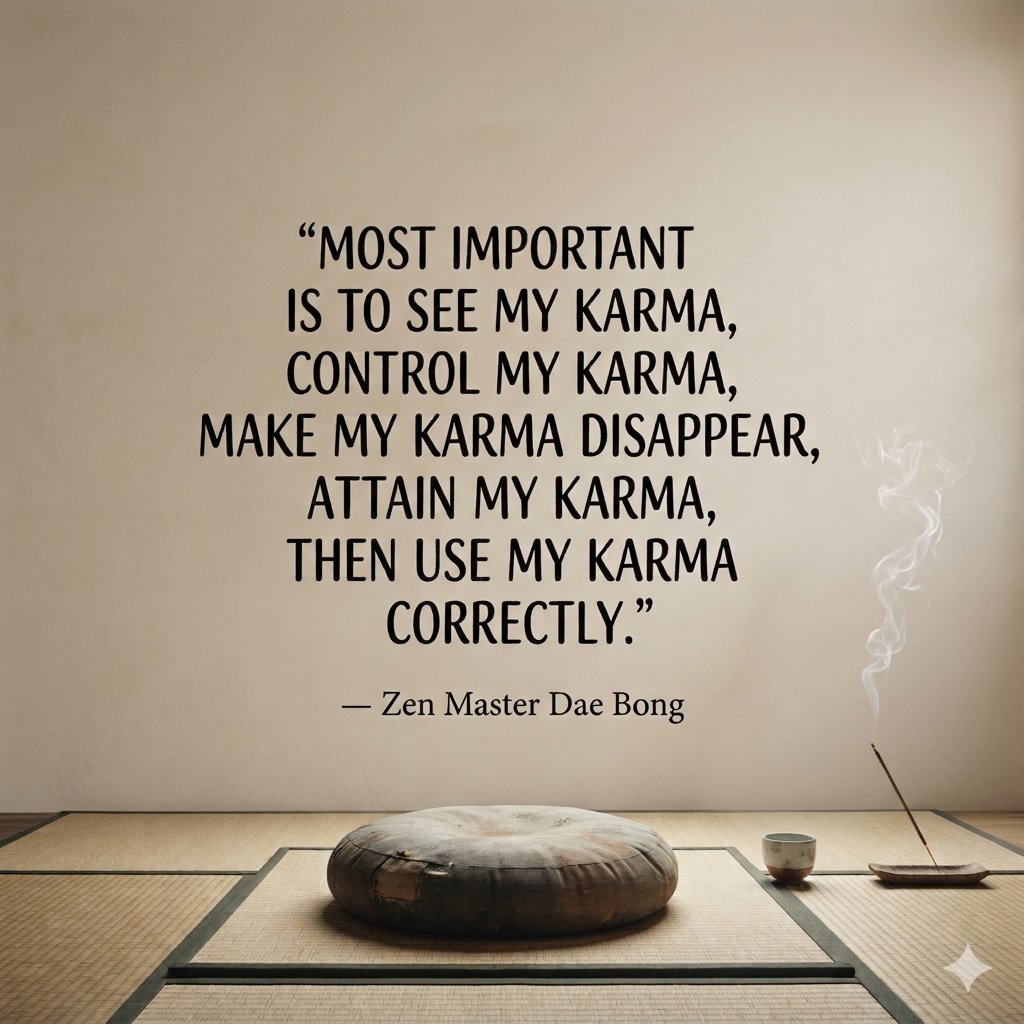
Zen practice helps us perceive our karma so that we can work through it, transforming the distressing circumstances that cause our suffering into compassion and wisdom. Silent retreats are the primary Zen technique that gives us the space to perceive and cut through our “mind-habits:”
“If you truly want to change your karma, do not make good or bad. That is correct practicing. How do you use your karma to help all beings? If you only want to change your karma, that is already a big mistake. If you have karma, you must find the correct function of your particular karma: this is how you take away your karma.” – Zen Master Seung Sahn
Can I be free of karma?
In the words of Zen Master Seung Sahn, “If you want to make your karma clear, then from moment to moment keep a correct situation, correct relationship to your situation, and correct function. In that way you can change your karma. When your center is not strong, outside conditions and outside situations will always control you. That is simply your karma controlling you…If your life and your actions are always clear and correct, then you get complete freedom in every situation. Coming and going between heaven and hell, nothing can hinder your original job of saving all beings from suffering.” – Zen Master Seung Sahn, The Compass of Zen.
References and Learn More
- What is karma? (YouTube Playlist)
- Seung Sahn. (1997). The Compass of Zen (H. Gak, Ed.). Shambhala Publications.
- Rhodes, B. (2024). Composting Our Karma: Turning Confusion Into Lessons For Awakening Our Innate Wisdom. Shambhala Publications.
- Bodhi, B. (Trans.). (2009). Majjhima Nikāya 135: The shorter exposition of action. SuttaCentral. https://suttacentral.net/mn135/en/bodhi?lang=en
- Thanissaro, B. (Trans.). (2025). Aṅguttara Nikāya 6.63: A penetrative discourse. SuttaCentral. https://suttacentral.net/an6.63/en/thanissaro?lang=en