Surrender
by Zen Master Tan Gong (José Ramírez)
For the past three years, Providence Zen Center and our sister Sangha, Full Moon Zen, have jointly hosted our Two Traditions, One Family retreat each spring, allowing us to share our Zen practices and traditions. The Full Moon Zen Sangha also sits sesshins (the equivalent of Kwan Um Zen Yong Maeng Jong Jin retreats) at our monastery three times per year, always graciously inviting me to give a Dharma talk. These sesshins usually have a theme, and the one for their August sesshin was surrender.
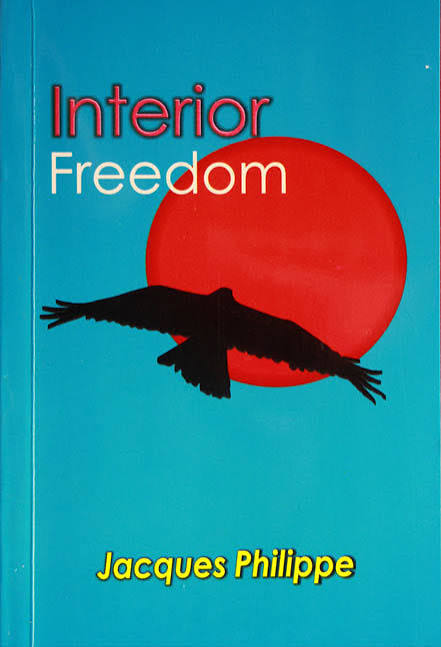
Surrender is an interesting word because, for most of us, it has negative connotations, evoking feelings of defeat and submission. The etymology of surrender has the root Sur (meaning over, like in “surname” and “surcharge”) and Rendre (meaning to give back or to yield). What is it that we are giving back? What are we yielding to? We are giving back the desire to control everything. We are yielding to the uncomfortable feeling of insecurity. It is this desire for control and this need for security that usually lead to fear, impatience, and irritation. We think we can control our life but, as Anthony Hamilton sings, “Life has a way of humbling you down.” In his book, Interior Freedom, Fr. Jacques Philippe wrote:
“It may be that in various parts of our lives we shall have to follow the path—possibly a difficult one—that leads from rebellion or resignation to consent, and ends finally in ‘choosing what we did not choose.’” In following this, possibly difficult, path Fr. Philippe points to three possible attitudes: rebellion, resignation, and consent. With rebellion, our strong likes and dislikes appear, we “reject the reality” that things are not the way we want them to be, that they are not what we deserve. With resignation, the poor-me gives up, but “it is just a declaration of powerlessness that goes no further.”
We think of surrender as resignation, but surrender is our consent “to say yes to the reality” in front of us, to embrace “what we did not choose.” I see surrender as what Zen Master Kōshō Uchiyama calls “opening the hand of thought”; the “don’t make anything” or “put it all down” (放下着 Pang ha cha) of Zen Master Seung Sahn. In Christian terms, we abandon ourselves to the will of God, the image of Jesus praying on the Mount of Olives, “Father, if thou art willing, remove this cup from me; nevertheless, not my will, but thine, be done.”
One kong-an that strikes me every time I read it is the encounter between Zen Master Shitou Xiqian and a monk named Huilang.
Huilang once asked Zen Master Shitou: “What is the awakened one?”
The master said, “You don’t have awakened mind.”
Huilang, dejected, said, “I’m just human. I know I run around and have all kinds of ideas.”
The master said, “Active people with ideas still have awakened mind.”
Huilang asked, “Then why don’t I?”
The master said, “Because you’re not satisfied to be just human.”
Huilang had a deep realization.
Huilang’s first reaction is dejection, resignation, “I’m just human,” followed by indignation, “Why don’t I?”, and then, a statement that hits the mind: “Because you’re not satisfied to be just human.” What does it mean to be just human? Zen Master Tianhuang Daowu, a Dharma heir of Zen Master Shitou, has some suggestions for us. One day his attendant, Lungtan, asked him how to maintain awakening. Zen Master Tianhuang instructed him, “Live in accordance with conditions as they arise moment to moment, surrender to everyday mind. There’s nothing sacred except this.”
There is a simplicity to surrendering to “everyday mind,” to consenting to “conditions as they arise moment to moment,” and sometimes we have no choice. Zen Master Wu Kwang (Richard Shrobe) said that, “When you really face the fact that there is nowhere to go and no choice, then you enter your situation completely. Your mind does not keep saying, well, maybe I’ll do this, maybe I’ll do that. There is no choice. There is only this moment, moment by moment by moment. And at that point, you can open to the simplicity of your being and of your connection with others. From that, clear action is possible, compassionate meeting is possible.”
Clear action and compassionate meeting. That, is the ultimate surrender.
<< Back